Signs Your Houston Building Needs Structural Steel Repair And What to Do About It
If you own or manage a commercial building in Houston, there’s a good chance structural steel plays a major role in holding everything together. And at some point, structural steel repair becomes part of the deal. From warehouses and retail centers to industrial facilities and office buildings, steel frameworks are everywhere across the Greater Houston area. But here’s the thing; steel doesn’t last forever, especially in a climate like ours.
Houston’s brutal combination of heat, humidity, hurricane-force winds, and unpredictable soil movement puts enormous stress on structural steel components. Over time, that stress shows up as visible damage, and if you ignore it long enough, you’re looking at serious safety risks and expensive emergency repairs.
So how do you know when your building actually needs structural steel repair? And more importantly, what should you do once you spot trouble? Let’s walk through the warning signs, what’s causing them, and exactly what steps to take.
Why Houston Buildings Are Especially Vulnerable to Steel Damage
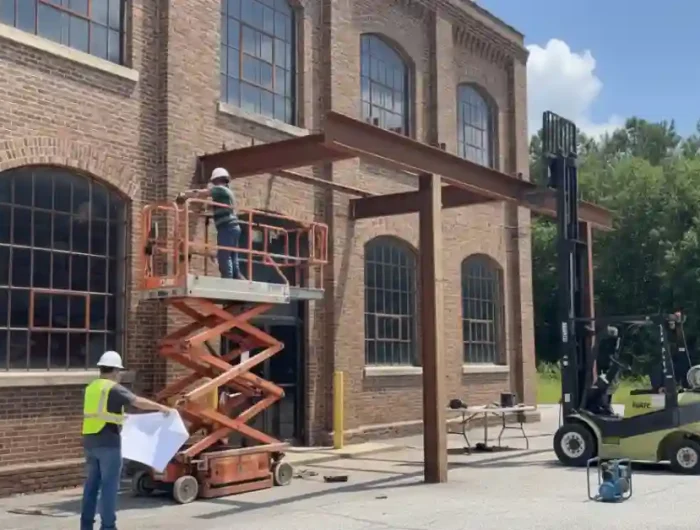
Before we get into the warning signs, it helps to understand why Houston is particularly tough on steel structures. It’s not just one factor – it’s a combination of environmental conditions that work together to break things down.
First, there’s the humidity. Houston’s average relative humidity hovers around 75%, and during the summer months, it’s even higher. That constant moisture exposure accelerates corrosion on exposed or poorly coated steel surfaces, making structural steel repair a frequent necessity for building owners in the area. Then you’ve got the salt air drifting in from the Gulf Coast, which makes corrosion happen even faster.
On top of that, Houston sits on expansive clay soil. When it rains, the soil swells. During droughts, it shrinks. That constant expansion and contraction shifts foundations, and when foundations move, the steel framework above them takes on stress it wasn’t designed to handle. Add in the occasional hurricane or tropical storm, and you’ve got a recipe for structural problems that can develop quickly.
Recognizing the Warning Signs That Something's Wrong
Now let’s talk about what to actually look for. Most building owners aren’t structural engineers, and that’s perfectly fine. You don’t need to be one to spot the early indicators that something isn’t right. However, you do need to know where to look and what these signs mean.
Visible Rust and Corrosion on Steel Members
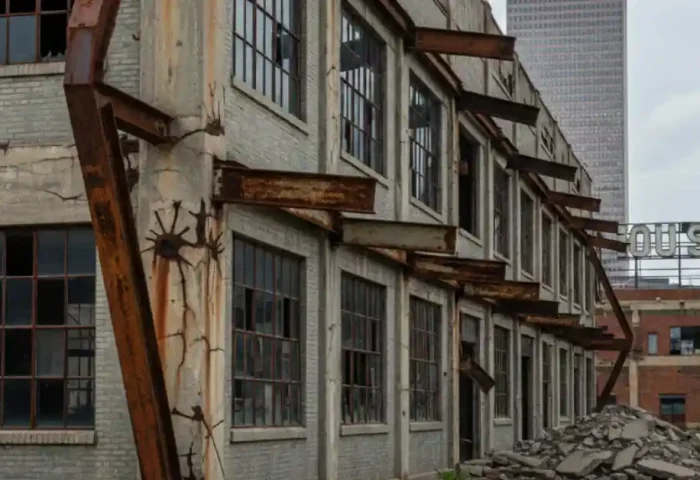
This is the most obvious sign, and unfortunately, it’s also the one people tend to ignore the longest. Surface rust might seem cosmetic, but once corrosion starts eating into the steel, it reduces the load-bearing capacity of the member. If you’re noticing rust on your building’s steel columns, those vertical supports carrying the weight of your structure; it’s time to take action before the problem gets worse. Addressing steel column repair in Houston early can prevent a small corrosion issue from turning into a full replacement job.
Cracking, Bending, or Warping in Beams
Steel beams run horizontally and support your roof, floors, and walls. When they start showing signs of bending, cracking at weld joints, or visible deflection, something is seriously off. This often happens after storm events or when a building has been carrying loads beyond its original design capacity.
If your horizontal supports are showing distress, professional steel beam repair in Houston should be a priority. A compromised beam doesn’t just affect one area; it redistributes stress across the entire framework, which can trigger a chain reaction of failures.
Flange Damage or Web Cracking on I-Beams
I-beams are a specific type of structural member with that distinctive “I” shape, and they’re commonly used in Houston’s commercial and industrial buildings. The flanges; those top and bottom horizontal sections and the vertical web between them each serve critical functions. When you see cracking in the web, buckling along the flanges, or section loss from corrosion, the beam’s structural integrity is compromised.
Because I-beams carry significant loads, even minor damage deserves professional evaluation. Getting timely I-beam repair in Houston ensures the affected member is reinforced or replaced before it affects surrounding components.
Misaligned Doors, Windows, and Walls
Here’s one that catches a lot of building owners off guard. If doors are suddenly sticking, windows won’t close properly, or you’re noticing new cracks running along walls or ceilings, it might not be a cosmetic issue at all. These are classic symptoms of structural movement, and in a steel-framed building, that movement often traces back to failing columns or beams.
Unusual Sounds or Vibrations
This one sounds dramatic, but it’s real. Popping, creaking, or groaning sounds particularly during wind events or temperature swings can indicate that steel connections are under stress. Similarly, if you notice unusual vibrations through the floor or walls during normal use, something in the structural framework may be shifting.
What Causes Structural Steel Damage in the First Place?
Understanding the root cause matters because it determines the right repair approach. In Houston, the most common culprits include:
Environmental Exposure and Corrosion
As mentioned earlier, Houston’s humid subtropical climate paired with Gulf Coast salt air creates perfect conditions for oxidation. Buildings near the Ship Channel or in coastal areas tend to see accelerated corrosion, sometimes within just a few years of construction if protective coatings weren’t applied correctly.
Storm and Wind Damage
Hurricanes, tropical storms, and even severe thunderstorms can cause immediate structural steel damage. High winds create lateral forces on buildings that push steel connections beyond their limits, often requiring structural steel repair after a single major storm event. Flying debris can also dent, puncture, or weaken steel members directly.
Foundation Settlement and Soil Movement
Houston’s clay soils are notorious for causing foundation issues. When a foundation shifts, it pulls and pushes the steel frame with it, creating stress concentrations at connections and mid-span points that can lead to cracking or buckling over time.
Age and Deferred Maintenance
Sometimes, the biggest factor is simply time. Older buildings that haven’t had regular structural inspections or maintenance are far more likely to develop problems. Protective coatings wear off, minor damage compounds, and eventually what started as a small fix becomes a major structural steel repair project.
Must Read: Common Roof Ridge Vent Problems
What to Do When You Spot These Signs
If any of the warning signs above sound familiar, here’s what you should do and what you should avoid.
Don't ignore it
Structural issues never get better on their own. They always get worse, and the cost of repair goes up with every month you wait.
Get a professional inspection
Have a qualified structural steel repair contractor assess the damage. They’ll evaluate whether you need localized repair, reinforcement, or full member replacement. They’ll also identify the root cause so the repair actually lasts.
Prioritize the most critical repairs
Not every issue requires an emergency response, but some do. A cracked I-beam flange or a severely corroded column should be addressed immediately, while minor surface rust can typically be scheduled for maintenance.
Invest in preventive maintenance going forward
Once repairs are completed, establishing a regular inspection schedule and keeping protective coatings in good condition will save you significantly in the long run. Structural steel repair costs far less when caught early.
Don't Wait Until It's an Emergency
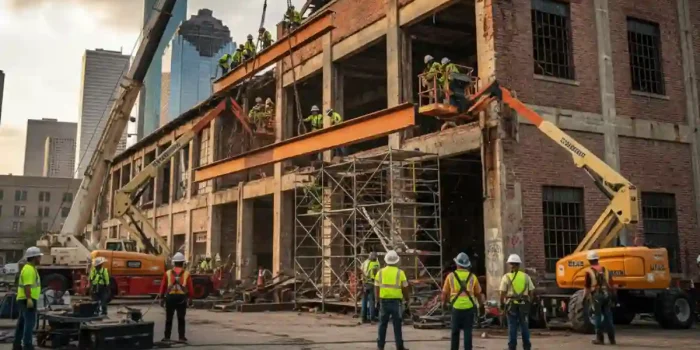
Houston’s climate and soil conditions make structural steel damage more of a “when” than an “if” for most commercial buildings. The good news is that catching problems early — whether it’s a corroding column, a deflecting beam, or a cracked I-beam gives you affordable structural steel repair options. You can plan repairs on your timeline, control costs, and avoid the safety risks that come with deferred maintenance.
If you’ve noticed any of these warning signs in your building, don’t sit on it. Reach out to a Houston structural steel repair specialist who understands the unique challenges our buildings face, and get a clear picture of what’s needed to keep your building safe and sound for years to come.